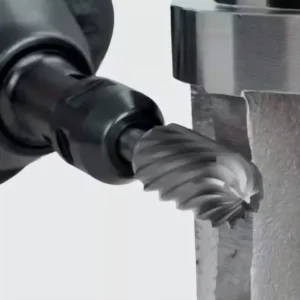
Tungsten carbide rotary burrs are universal grinding consumables widely used in mold making, foundry, metalworking, shipbuilding, and steel structure industries. They serve for deburring, weld dressing, cavity undercut cleaning, and workpiece chamfering.
The market is flooded with low-quality products made from recycled carbide scrap, commonly suffering from four major pitfalls: brazing failure leading to shank detachment, excessive runout, premature edge chipping, and reduced service life — ranging from workpiece scratches and frequent tool changes to serious safety hazards from flying burr heads at high RPM.
This guide breaks down purchasing decisions by scenario: choosing between bulk and set options, matching standard, extended, and non-standard burrs to specific working conditions, and a 5-step on-site method to identify inferior products. It applies directly to factory procurement, hardware distributors, and machining professionals.
1. Basic Classification: Bulk vs. Set, Standard vs. Extended vs. Custom Burrs
(1) Bulk vs. Set: Purchase by Demand to Avoid Waste
Set Rotary Burrs
- Specifications: Typical 10/12/20-piece boxed sets, including 7 basic shapes — A (cylinder), C (cylinder with ball nose), D (ball shape), E (oval), F (flame/torch), G (pointed cone), M (taper cone) — mostly with 6mm standard shanks.
- Advantages: Ideal for beginners, repair shops, multi-process occasional grinding, and prototyping. Neat storage, ready-to-use, one-stop basic shape coverage. Bestseller for e-commerce retail.
- Disadvantages: Low usage rate for less common shapes in the set, leading to long-term idleness. Mixed quality in low-end sets (some pieces may use recycled carbide). Higher per-unit cost for high-frequency long-term use.
- Suitable for: Individual workshops, auto repair, wood carving, small machining shops, first-time stock-up hardware stores.
Individual Bulk Burrs
- Specifications: Sold per piece, freely configurable with single-cut / double-cut teeth and various shank diameters (3mm / 6mm).
- Advantages: Precise matching of high-frequency shapes in workshops, no inventory waste. Lower unit price from direct manufacturers. Mix-and-match with extended, custom, and special tooth patterns.
- Disadvantages: Requires self-organization and storage. Higher shipping costs for small scattered orders.
- Suitable for: Mold factories, steel structure plants, foundries, long-term stable procurement customers.
(2) Standard / Extended / Custom Burrs: Application Comparison
Standard-Length Burrs (Industry Standard)
- Parameters: 40mm shank length, 8–16mm cutting edge length, 3/6mm shank diameter, total length 50–60mm.
- Advantages: Easy concentricity control, high rigidity, minimal vibration at high RPM, ample stock, lowest price.
- Applications: Surface flash removal, flat weld dressing, outer contour chamfering, open cavity grinding — covers most conventional machining scenarios.
Extended-Shank Burrs
- Parameters: Extended shanks of 75/100/150/200mm with unchanged cutting heads. Two manufacturing processes: semi-extended and full-extended.
- Advantages: Reaches deep cavities, deep holes, pipe inner walls, narrow mold cavities, and welding dead corners inaccessible to standard burrs.
- Disadvantages: Longer shank = lower rigidity and harder concentricity control; prone to vibration at high speed and high feed rate.
- Pitfall to avoid: Inferior extended burrs use segmented welded steel shanks with weak welds that break directly under high-speed rotation. Prioritize one-piece turned extended steel shanks.
Custom Non-Standard Burrs
- Customization scope: Special cutting diameters, extra-long/short shanks, profiled heads, special single/double teeth, wide teeth for aluminum, thickened edges, hex shanks, extended cutting edges, special coatings (TiN / TiAlN), and custom shapes per drawings.
- Advantages: Adapts to special workpieces, deep narrow grooves, profiled molds, and special material processing — significantly improves grinding efficiency and reduces rework.
- Disadvantages: MOQ requirements, longer sampling lead time, higher unit price than standard stock.
- Procurement advice: For stable mass production, test with small batches first and confirm cutting performance before large orders. Direct manufacturers support small-batch sampling; traders typically double the customization lead time.
Classification Selection Quick Reference Chart
| Type | Core Advantages | Disadvantages | Recommended Scenarios |
| Set / Kit | One-stop solution, easy storage | Rare sizes idle, higher unit price | Individual workshops, maintenance, small sample testing |
| Bulk (Loose pieces) | Purchase on demand, no inventory waste | No storage kit included | High-frequency factory use, single burr repurchase |
| Standard shank | High rigidity, good concentricity, ample stock | Cannot reach deep cavities | Flat surfaces, external surfaces, regular cavities |
| Extended shank | Can reach deep holes and cavities | Long shank prone to vibration, higher cost | Pipes, deep molds, internal dead corner cleaning |
| Customized (Non-standard) | Tailored for specific applications, highest efficiency | Longer lead time, MOQ requirement | Irregular workpieces, special mass production lines |
2. 5-Step On-Site Identification of Low-Quality Tungsten Carbide Burrs
Step 1: Weak Welding — Shank Detachment at High Speed (Most Dangerous Safety Hazard)
Identification Methods:
- Visual weld inspection: Quality vacuum silver brazing features smooth, even weld seams at the head-shank junction with no porosity, blackening, or cracks, and uniform solder coverage. Inferior spot welding or ordinary copper brazing shows uneven seams, black spots, voids, and missing solder.
- Simple pull test: Firmly wiggle the cutting head by hand — no movement on quality burrs. Inferior ones show gaps with slight shaking and fly off above 10,000 RPM, causing injury.
- Process difference: Standard flat-bottom silver brazing has low stress and high bond strength. Low-cost tail-hole copper brazing damages the carbide substrate at high temperatures, reducing toughness and causing tooth breakage.
Step 2: Excessive Runout — Vibration, Scratches, and Fast Wear
Identification Methods:
- Hand-held rotation test: Mount on an electric/pneumatic grinder and run idle. Observe the shadow projection 5mm from a wall. Quality burrs show a stable, steady outline; inferior ones exhibit obvious eccentric vibration with dancing light shadows.
- Tooth profile inspection: CNC-ground teeth are symmetrical and uniformly deep. inferior burrs have crooked, uneven teeth with unbalanced cutting forces leading to frequent chipping.
Step 3: Recycled Carbide Passed as Virgin Material — Insufficient Hardness & Easy Chipping
- Head color inspection: Virgin tungsten carbide shows uniform matte silver-gray with no discoloration or black spots. Recycled material appears dull black with brownish spots and oxidizes/rusts easily after a few days of storage.
- Simple hardness test: Lightly scrape the cutting edge with a standard HSS file. Virgin material leaves no scratch; recycled material shows visible marks immediately, with hardness below HRA85 (national standard ≥HRA90).
- Cutting test: Grinding stainless steel — genuine burrs produce continuous silver-white curled chips; inferior recycled material produces fragmented black chips, with obvious edge dulling and chipping after 10 minutes of use.
Step 4: Reduced Carbide Thickness & Cut-Corner Tooth Patterns
Low-cost burrs have thinner carbide layers that wear through to the steel shank quickly. Double-cut burrs with simplified tooth grooves have poor chip evacuation, clog with chips and drastically reduce grinding efficiency.
Identification: Compare cutting edge thickness with genuine same-model burrs — inferior ones have noticeably shorter carbide sections. Observe tooth groove depth — shallow teeth lack sufficient chip evacuation space.
Step 5: Fake Coatings — No Wear Resistance
Claimed titanium gold coatings are often just surface paint that rubs off within minutes of grinding, providing no wear resistance or anti-clogging benefit. Genuine TiN coatings penetrate the substrate and remain intact through prolonged high-temperature grinding.
Identification: Lightly wipe the surface with alcohol or sandpaper — paint coatings rub off immediately, while genuine coatings do not.
Rotary Burrs Purchasing Summary
Individual workshops / repair shops: Choose standard 10-piece sets; reject low-cost recycled carbide sets.
Small-to-medium processing plants: Bulk-purchase high-frequency shapes in virgin tungsten carbide with vacuum silver brazing. Add a few extended-shank burrs for deep cavity work. Test custom samples for special profiled workpieces.
Quality inspection baseline: Always check welds, concentricity, and material color upon receipt. Test samples before bulk orders to avoid weld failure, eccentric vibration, and chipping losses.
Selection principle: Prioritize standard models, use extended versions as needed, customize non-standard only when necessary. Don’t blindly chase low prices — calculate total cost based on service life and safety.
If you’re sourcing tungsten carbide rotary burrs and need guidance on extended/custom model selection, or are concerned about purchasing inferior grinding heads with weld failure and poor concentricity, feel free to consult us.
We are a professional tungsten carbide rotary burr manufacturer offering a full range of standard, extended, and custom products — made from virgin tungsten carbide, with vacuum silver brazing and 5-axis CNC grinding. We support free samples, material test reports, and fast small-batch prototyping. Whether you’re a factory purchasing in bulk, a hardware distributor stocking inventory, or need custom burrs for specific working conditions, contact us for a complete selection guide + exclusive quotation.