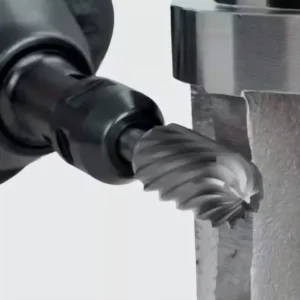
Rotary burrs are indispensable high-efficiency cutting tools applying in modern metalworking, metal product manufacturing, mold making and many other industries. They are widely used for deburring, chamfering, profiling, engraving and precision machining. Currently, the two most mainstream rotary burr materials on the market are tungsten carbide (hard metal) and high-speed steel (HSS). Choosing the right material directly affects machining efficiency and quality, as well as production costs and tool life.
This article provides a comprehensive comparison between tungsten carbide and HSS rotary burrs from multiple dimensions including material properties, core performance, machining adaptability, application scenarios and cost-effectiveness. Especially, it also includes an in-depth analysis of the critical variable of the 2026 raw material price surge, helping you make the most informed decision in the current market environment.
1. Material Composition and Basic Properties
Tungsten Carbide Rotary Burrs
Tungsten carbide rotary burrs are primarily composed of Tungsten Carbide (WC) and Cobalt (Co) binder. Tungsten carbide provides extremely high hardness and wear resistance, while cobalt enhances the material’s toughness to prevent chipping during cutting.
Typical composition: 90%-94% tungsten carbide + 6%-10% cobalt
Hardness range: HRA 85-HRA 93 (equivalent to HRC 68-HRC 80)
Manufacturing process: Powder metallurgy sintering followed by precision grinding
HSS Rotary Burrs
High-speed steel is a high-alloy tool steel containing alloy elements such as tungsten, molybdenum, chromium and vanadium. It maintains high hardness at elevated temperatures, hence the name “high-speed steel”.
Typical composition: W6Mo5Cr4V2 (M2, 6% tungsten, 5% molybdenum, 4% chromium, 2% vanadium)
Hardness range: HRC 62-HRC 68
Manufacturing process: Forging, heat treatment (quenching + tempering) followed by grinding or powder metallurgy
2.Comprehensive Core Performance Comparison
| Performance Indicator | Tungsten Carbide Rotary Burrs | HSS Rotary Burrs | Advantage |
| Hardness | HRA 85-HRA 93 | HRC 62-HRC 68 | Tungsten Carbide |
| Wear Resistance | Extremely high, 10-20 times that of HSS | Moderate | Tungsten Carbide |
| Cutting Speed | 6,000-40,000 RPM, 4-7 times that of HSS | 3,000-15,000 RPM | Tungsten Carbide |
| Heat Resistance | Withstands 800-1000°C high temperatures | Starts softening above 550°C | Tungsten Carbide |
| Toughness/Impact Resistance | Poor, prone to chipping | Excellent, strong impact resistance | HSS |
| Surface Finish | High, up to Ra≤1.6μm | Moderate | Tungsten Carbide |
| Resharpenability | Difficult, requires professional equipment | Easy, can be resharpened on ordinary grinders | HSS |
Hardness and Wear Resistance
Tungsten carbide is significantly harder than HSS. This allows tungsten carbide rotary burrs to cut almost all metal materials, including hardened steel, stainless steel and titanium alloys. At the same time, its exceptional wear resistance means the cutting edges stay sharp much longer, greatly reducing tool changes and downtime.
Cutting Speed and Efficiency
Thanks to its superior heat resistance and hardness, tungsten carbide rotary burrs can operate at higher rotational speeds, with cutting speeds 4-7 times faster than HSS. This directly translates to higher production efficiency, especially in mass production where the advantage is particularly obvious.
Toughness and Impact Resistance
This is the main advantage of HSS. High-speed steel has better toughness and impact resistance, making it less likely to chip or break during interrupted cutting, high-vibration operations or when used improperly. Tungsten carbide, on the other hand, is relatively brittle and prone to tooth chipping or even complete breakage if subjected to strong impacts or misuse.
3.Machining Material Adaptability Comparison
Materials Suitable for Tungsten Carbide Rotary Burrs
- High-hardness metals: Hardened steel (HRC≤70), stainless steel, mold steel, tool steel
- Difficult-to-machine alloys: Titanium alloys, nickel-based alloys, high-temperature alloys
- Ferrous metals: Cast iron, cast steel, carbon steel, alloy steel
- Non-ferrous metals: Copper, aluminum, brass, bronze
- Non-metallic materials: Marble, jade, bone, hard plastics, carbon fiber composites
Materials Suitable for HSS Rotary Burrs
- Soft metals: Aluminum, copper, brass, zinc alloys
- Common ferrous metals: Low-carbon steel, medium-carbon steel, unhardened steel
- Non-metallic materials: Wood, plastics, acrylic, resin
Important Note: HSS rotary burrs are not suitable for machining materials with hardness exceeding HRC 40, as they will wear out rapidly and may even be damaged.
4.Application Scenario Comparison
Typical Applications of Tungsten Carbide Rotary Burrs
- Mold manufacturing: Finishing and profiling of various metal mold cavities
- Aerospace: Machining and deburring of titanium alloy and high-temperature alloy components
- Automotive industry: Precision machining of engine parts and transmission housings
- Shipbuilding industry: Flash and weld seam cleaning of large castings and weldments
- Precision machinery: Machining of internal holes, grooves and keyways in complex parts
- Medical devices: Finishing of stainless steel surgical instruments
- Artistic engraving: Fine engraving of metals and jade
Typical Applications of HSS Rotary Burrs
- General maintenance work: Deburring and chamfering of ordinary metal parts
- Woodworking: Carving, profiling and hollowing of wood
- Plastic processing: Trimming and shaping of plastic products
- Small-batch prototyping: Machining of one-off or small-batch parts
- Manual operations: Light-duty work with hand-held electric or pneumatic tools
- Interrupted cutting: Machining scenarios with vibration or impact
5.Cost Re-evaluation Amid the 2026 Raw Material Price Surge
Since the second half of 2025, severe supply-demand imbalance in the global tungsten industry chain has led to a historic surge in tungsten-based raw material prices. This change has profoundly affected the cost structure and cost-performance ratio of both tungsten carbide and HSS rotary burrs.
Raw Material Price Increase Comparison (Early 2025 – May 2026)
| Raw Material | Early 2025 Price | May 2026 Price | Cumulative Increase |
| Tungsten Carbide Powder | ~US$ 50~55/KG | US$ 210/KG | +417% |
| M2 High-Speed Steel | ~US$ 9,400~9,500 /Ton | US$ 13,000~13,300 /Ton | +37.9% |
Impact on Rotary Burr Product Prices
Tungsten carbide rotary burrs: As raw material costs have skyrocketed from 40%-50% to over 80% of total production costs, product prices have increased by 150%-200% cumulatively.
HSS rotary burrs: Although ferrotungsten prices have also risen sharply, tungsten only accounts for 4%-6% of HSS composition. With relatively lower raw material cost share, product prices have increased by approximately 20%-30% cumulatively.
Comprehensive Cost Recalculation (Data as of H1 2026)
Case Study: Machining a batch of stainless steel parts
HSS rotary burr: Processes 100 pieces per unit, price US$2 (30% increase)
Tungsten carbide rotary burr: Processes 1,500 pieces per unit, US$14 (150% increase)
For machining 1,500 pieces:
HSS: Requires 15 units, total cost US$30
Tungsten carbide: Requires 1 unit, total cost ¥US$14
Savings: US$16 , plus significant time saved from fewer tool changes
Despite the substantial price increase of tungsten carbide rotary burrs, their service life is still 10-20 times that of HSS, so they maintain a comprehensive cost advantage, although the margin has narrowed. In high-hardness material machining and mass production scenarios, tungsten carbide rotary burrs remain the more economical choice.
7.Conclusion
Tungsten carbide and HSS rotary burrs each have their own advantages and applicable scenarios.
HSS rotary burrs are an economical and practical choice, maintaining their position in soft material machining, small-batch prototyping and manual operations due to their good toughness, relatively small price increase and resharpenability.
Tungsten carbide rotary burrs remain the performance leaders, offering irreplaceable advantages in high-hardness material machining, precision machining and mass production with their exceptional hardness, wear resistance and cutting speed.
Although the 2026 raw material price surge has significantly increased the initial cost of carbide rotary burrs, their comprehensive cost is still lower than HSS rotary burrs in the long run.
Facing the dramatic fluctuations in raw material prices, Persistools adhere to the three principles of no material downgrading, no cutting corners and no quality compromise. We absorb cost pressures by optimizing our supply chain, improving production efficiency and refining manufacturing processes. We understand that only by helping customers reduce overall usage costs and increase production efficiency can we succeed in the fierce market competition.
In the future, we will continue to focus on the R&D and manufacturing of carbide cutting tools, creating greater value for global customers with higher quality products and more professional services.