
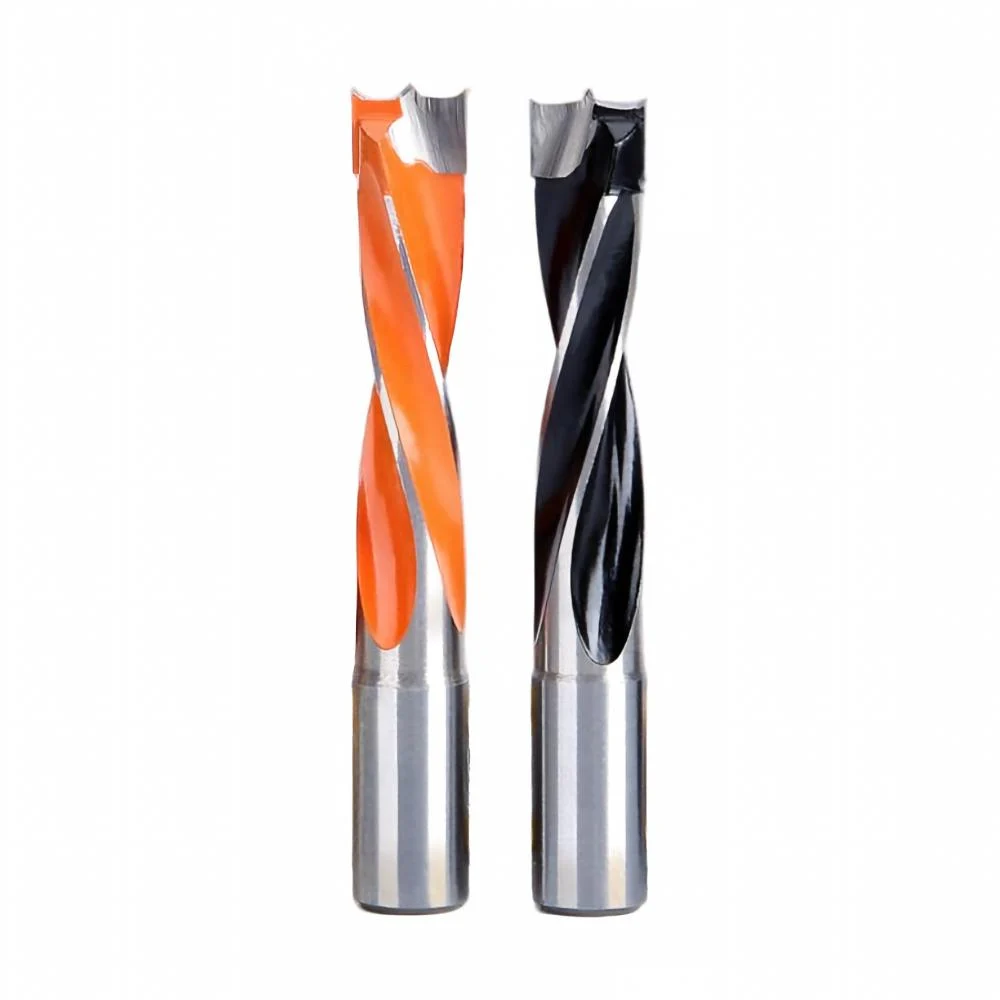
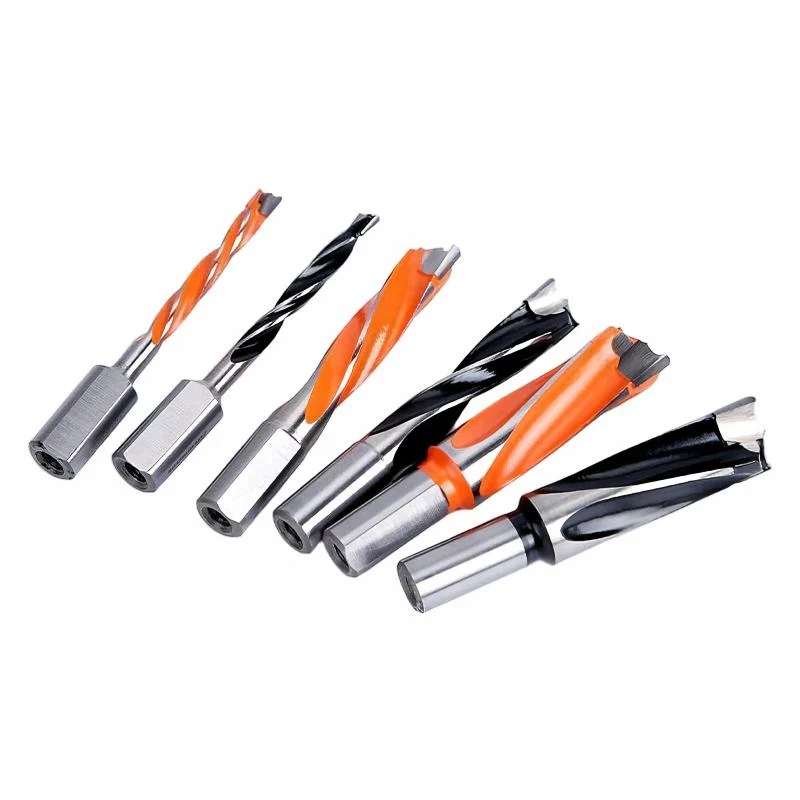
TCT Blind-Hole Boring Bits
TCT blind-hole boring bits for precise drilling of clean, controlled-depth holes in furniture panels and wood-based boards. Designed with a center spur for accurate positioning and outer cutting edges for smooth entry and reduced chipping, available in left-hand and right-hand rotation with standard and custom sizes.
TCT Blind-Hole Boring Bits
Persistools TCT blind-hole boring bits are precision woodworking drill bits designed for drilling blind holes in furniture panels, engineered wood boards, and other woodworking materials.
Unlike through-hole boring bits, blind-hole bits are intended to create holes with a controlled depth rather than fully penetrating the board.
They are widely used in furniture manufacturing for applications such as:
- Dowel holes
- Connector holes
- Hardware installation
- Fitting holes
- Assembly holes
- Pre-drilling on unmarked panel surfaces
- General blind-hole machining in panel furniture production
Accurate Positioning on Solid Panel Surfaces
Blind-hole boring bits are commonly used where no pre-existing hole is available.
For this reason, the cutting head is designed with a center spur that helps locate the drilling point accurately before the main cutting edges engage.
This provides several advantages:
- Accurate drilling start
- Reduced wandering on smooth board surfaces
- Better hole-position control
- Stable entry into laminated and engineered panels
- More consistent blind-hole accuracy
Clean Entry with Reduced Chipping
In addition to the center spur, the drill head uses side cutting edges and outer peripheral cutters to open the hole gradually and cleanly.
This structure helps:
- Reduce top-edge breakout
- Improve hole-mouth finish
- Produce cleaner blind-hole walls
- Maintain smoother entry into the workpiece
- Improve overall hole quality
This is especially important in furniture production, where drilled holes often need to remain clean for assembly, fitting accuracy, and final appearance.
TCT Cutting Head Construction
The cutting head uses brazed tungsten carbide on a steel body.
This construction offers a practical combination of:
- Good wear resistance
- Stable cutting performance
- High productivity in board drilling
- Suitable toughness for repeated use
- Long service life in furniture panel machining
TCT blind-hole boring bits are suitable for common furniture materials such as:
- MDF
- Particleboard
- Plywood
- Melamine-faced boards
- Laminated panels
- Solid wood
- Engineered wood
Left-Hand and Right-Hand Rotation
As with other furniture boring bits, blind-hole bits are available in:
- Left-Hand Rotation — commonly marked in red
- Right-Hand Rotation — commonly marked in black
The correct rotation direction should be matched to the spindle arrangement of the boring machine.
Used Together with Through-Hole Boring Bits
Blind-hole boring bits and through-hole boring bits are often used together in furniture drilling operations.
Although many sizes correspond to each other, their working functions are different:
- Blind-hole boring bits are used for controlled-depth drilling on intact panel surfaces
- Through-hole boring bits are used for complete penetration or hole breakthrough
Persistools can supply both types in matching diameter ranges for complete furniture boring systems.
Standard and Custom Sizes
Blind-hole boring bits are available in many standard diameters and can also be customized according to:
- Hole diameter
- Drilling depth
- Working length
- Overall length
- Shank diameter
- Rotation direction
- Cutting geometry
- Machine spindle system
- Customer drawing or sample
| Drill Diameter | Shank Diameter | Rotation | Cutting Material | Tip Geometry | Typical Application |
|---|---|---|---|---|---|
| Ø3 mm | 10 mm | LH / RH | TCT | Center Spur + Side Cutters | Small blind holes |
| Ø4 mm | 10 mm | LH / RH | TCT | Center Spur + Side Cutters | Furniture fittings |
| Ø5 mm | 10 mm | LH / RH | TCT | Center Spur + Side Cutters | Connector holes |
| Ø6 mm | 10 mm | LH / RH | TCT | Center Spur + Side Cutters | General blind drilling |
| Ø8 mm | 10 mm | LH / RH | TCT | Center Spur + Side Cutters | Dowel holes |
| Ø10 mm | 10 mm | LH / RH | TCT | Center Spur + Side Cutters | Hardware installation |
| Ø12 mm | 10 mm | LH / RH | TCT | Center Spur + Side Cutters | Panel machining |
| Custom | Custom | LH / RH | TCT | Custom | Special machine applications |
Product Type: Blind-Hole Boring Bit
Cutting Material: Tungsten Carbide Tipped (TCT)
Body / Shank: Precision Steel
Tip Geometry: Center Spur + Side Cutting Edges
Rotation: Left-Hand / Right-Hand
Color Identification: Red for LH / Black for RH
Application: Blind-Hole Drilling / Furniture Panel Machining / Hardware Installation
Processed Materials: MDF / Particleboard / Plywood / Laminated Panels / Solid Wood
Customization: Diameter, drilling depth, working length, shank size, rotation, and cutting geometry available on request.
What are TCT blind-hole boring bits used for?
What is the difference between blind-hole and through-hole boring bits?
Why does a blind-hole boring bit have a center spur?
Can you manufacture custom blind-hole boring bits?
If the above questions do not solve your doubts, please contact us through email or phone as well!
Persistools is fully committed to pursuing maximum efficiency in customer service and delivering premium customer experience. Whether you have pre-sales questions or encounter after-sales issues, you will receive our swift reply at all times. Our team always stays positive and dedicated to solving problems effectively.
