
Rewinder Top Slitter Knives
Precision top slitter knives for rewinding and web converting machines, designed to work against matching bottom knives for clean shear cutting. Available in dish-shaped HSS/tool-steel designs and flat solid-carbide blades with precision-ground bevels for paper, film, foil, nonwoven, and other roll materials.
Rewinder Top Slitter Knives
Persistools rewinder top slitter knives are precision circular cutting tools used in rewinding, slitting, and web converting equipment.
The upper knife works together with a matching bottom slitter knife. During operation, the two cutting edges are positioned with controlled overlap and side contact. As the moving web passes through the cutting zone, the material is separated by a continuous shearing action.
This cutting method is widely used for:
- Paper
- Plastic film
- Foil
- Nonwoven materials
- Tape
- Laminated web materials
- Other continuous roll products
A sharp and accurately ground upper knife helps maintain clean slit edges, stable cutting performance, and reduced material tearing during continuous production.
Dish-Shaped Top Slitter Knives
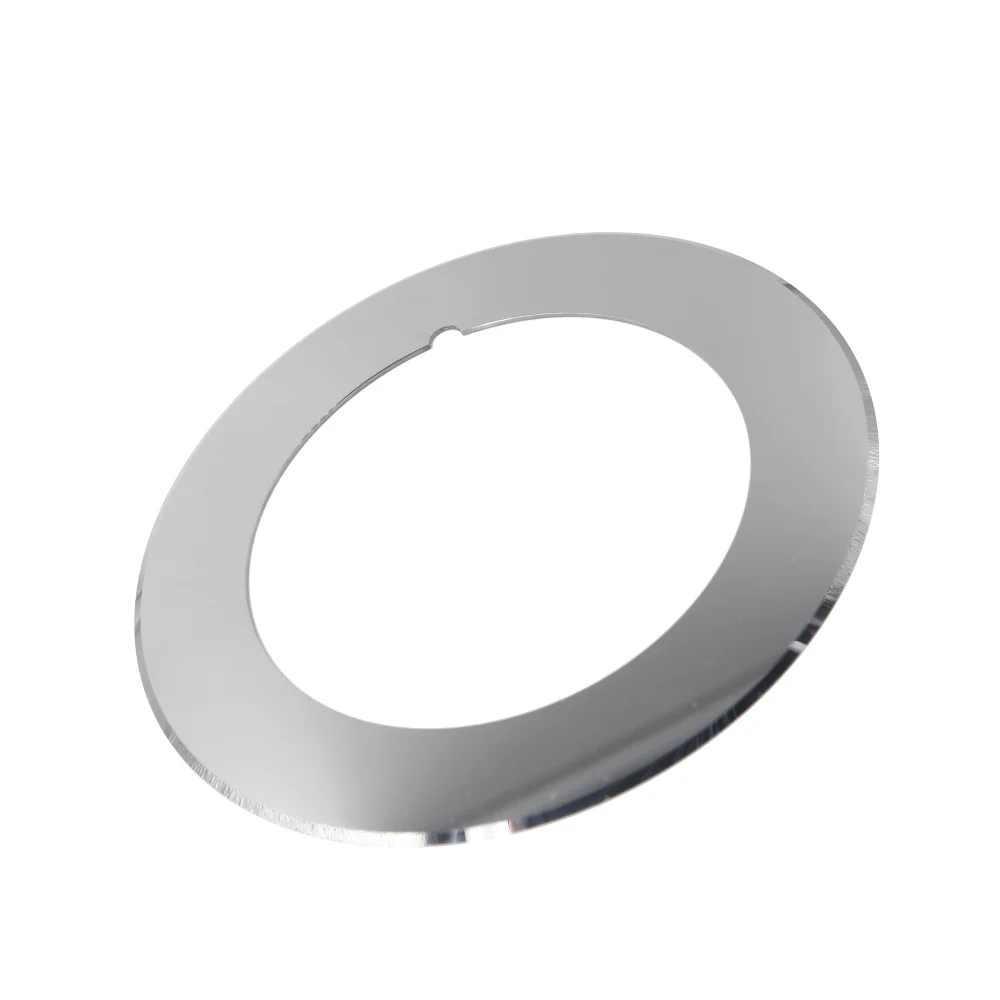
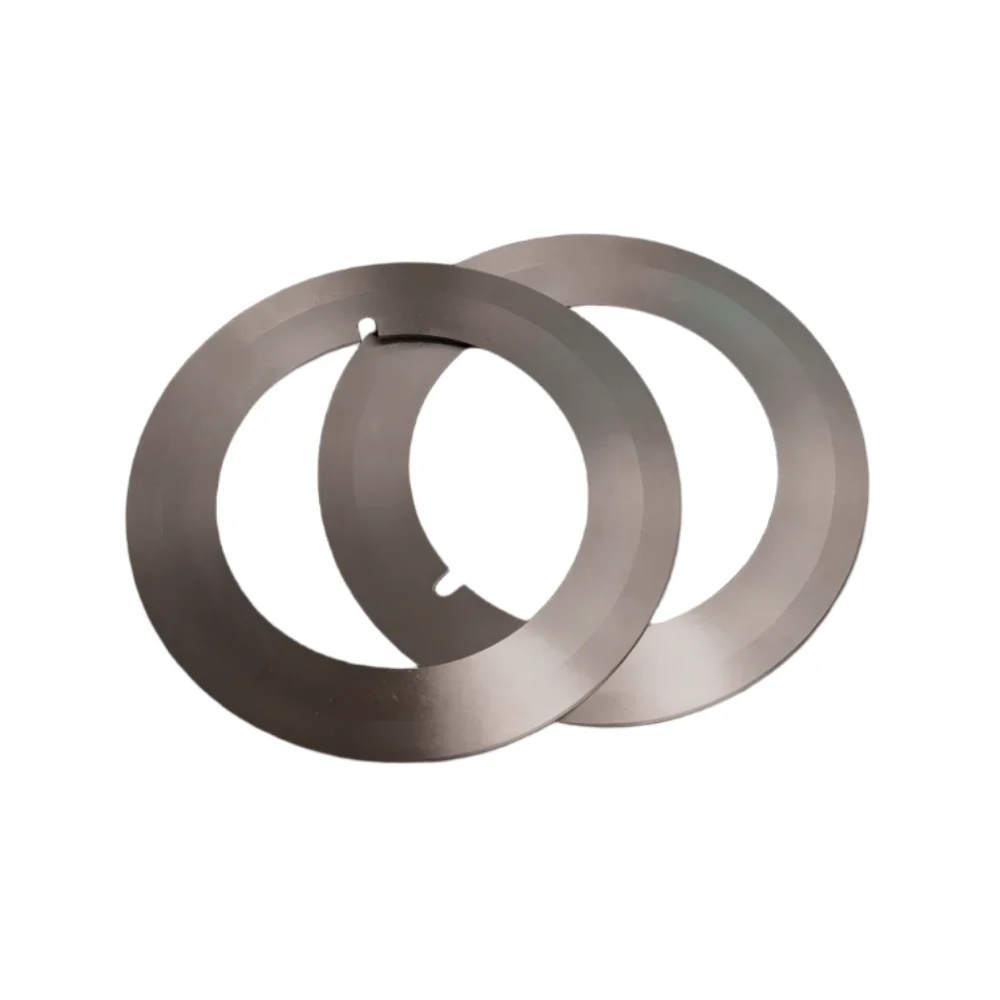
Dish-shaped knives are one of the most common upper-knife designs used in rewinder and slitter systems.
The concave profile provides the flexibility and contact geometry required for controlled engagement with the bottom knife.
These knives are commonly manufactured from:
- High-speed steel
- Tool steel
- Custom alloy steels
Depending on the application, HSS grades can provide a practical balance between sharpness, toughness, wear resistance, and manufacturing cost.
Because dish-shaped knives require controlled deformation and precision grinding during manufacturing, the concave angle is limited by blade diameter, thickness, material, and manufacturing conditions.
For Persistools dish-shaped top knives, the concave angle is generally controlled within approximately 5° maximum, depending on the specific blade design.
Flat Bevel Top Knives
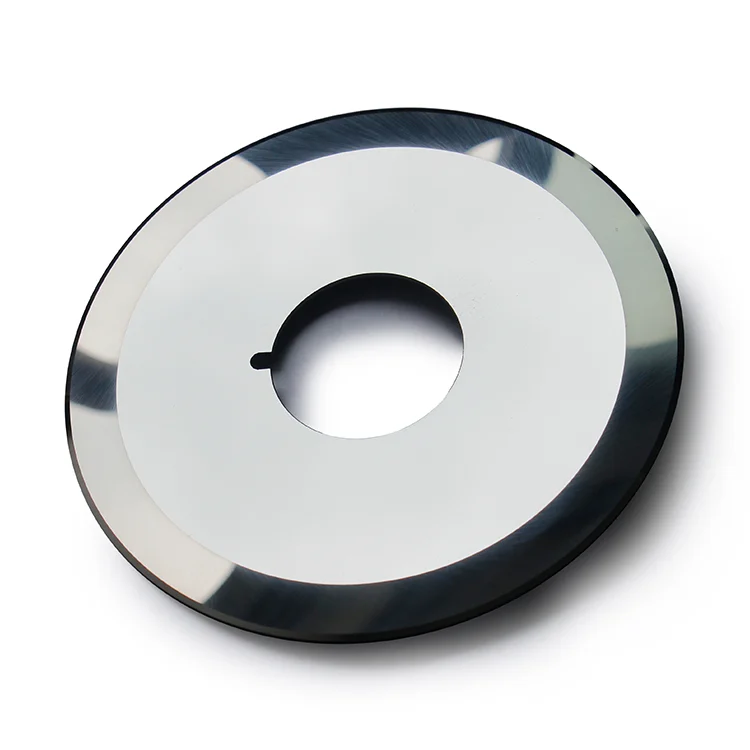
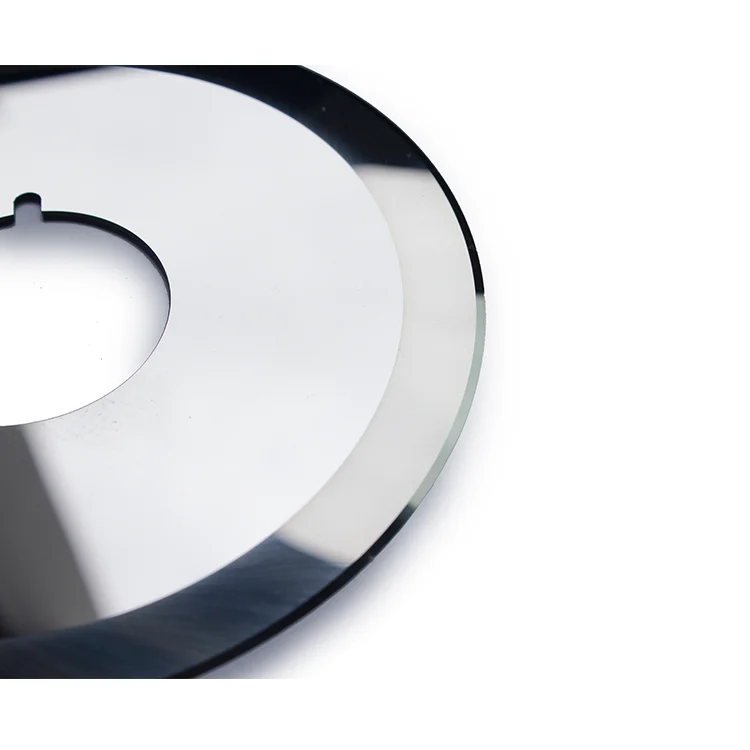
Flat top knives use a simpler flat circular body with a precision-ground bevel on one side of the cutting edge.
These blades are often manufactured from solid tungsten carbide, particularly where high wear resistance and long edge retention are required.
The cutting edge can be finished through multiple grinding operations to achieve:
- Sharp edge geometry
- Consistent bevel angle
- Low cutting resistance
- Stable contact with the bottom knife
- Clean shear cutting
Because the body is flat rather than deeply dished, solid carbide becomes more practical from a manufacturing perspective.
Precision Edge Preparation
The cutting performance of a top slitter knife depends heavily on edge quality.
Important factors include:
- Blade thickness
- Outer diameter
- Bore accuracy
- Side runout
- Flatness
- Dish angle
- Bevel angle
- Edge sharpness
- Surface finish
The final cutting edge is precision ground and can be secondary-finished according to the required material and slit quality.
Matched with Bottom Slitter Knives
Top knives normally operate together with hardened-steel or TCT bottom slitter knives.
Correct matching between the upper and lower knife affects:
- Cutting-edge contact
- Side pressure
- Blade wear
- Slit quality
- Cutting stability
- Service life
Persistools can also supply matching bottom slitter knives according to the same machine, dimensions, and cutting requirements.
| Knife Type | Typical Diameter | Thickness | Material | Edge Geometry | Typical Application |
|---|---|---|---|---|---|
| Dish-Shaped Top Knife | Ø80–120 mm | 1.0–2.0 mm | HSS / Tool Steel | Dish / Precision Edge | Paper slitting |
| Dish-Shaped Top Knife | Ø100–150 mm | 1.2–2.5 mm | HSS | Dish / Precision Edge | Film & web converting |
| Dish-Shaped Top Knife | Ø120–180 mm | 1.5–3.0 mm | Tool Steel / HSS | Dish / Custom | Rewinder systems |
| Flat Top Knife | Ø80–120 mm | 0.8–2.0 mm | Solid Tungsten Carbide | Single Bevel | Film / Foil slitting |
| Flat Top Knife | Ø100–150 mm | 1.0–2.5 mm | Solid Tungsten Carbide | Single Bevel / Precision Ground | High-wear applications |
| Custom | Custom | Custom | HSS / Tool Steel / Carbide | Custom | Machine-specific replacement |
Product Type: Rewinder Top Slitter Knife
Knife Styles: Dish-Shaped / Flat Bevel
Material Options: HSS / Tool Steel / Solid Tungsten Carbide
Dish Angle: Generally Up to Approx. 5°, Depending on Blade Design
Edge Geometry: Precision Ground / Single Bevel / Custom
Application: Rewinding / Slitting / Web Converting
Processed Materials: Paper / Film / Foil / Nonwoven / Tape / Laminated Webs
Matching: Designed to Work with Bottom Slitter Knives
Customization: Diameter, bore, thickness, dish angle, bevel angle, material, and edge geometry available on request.
What is a rewinder top slitter knife used for?
What is the difference between dish-shaped and flat top knives?
Why is the dish angle limited?
Can you supply matching bottom slitter knives?
If the above questions do not solve your doubts, please contact us through email or phone as well!
Persistools is fully committed to pursuing maximum efficiency in customer service and delivering premium customer experience. Whether you have pre-sales questions or encounter after-sales issues, you will receive our swift reply at all times. Our team always stays positive and dedicated to solving problems effectively.
