
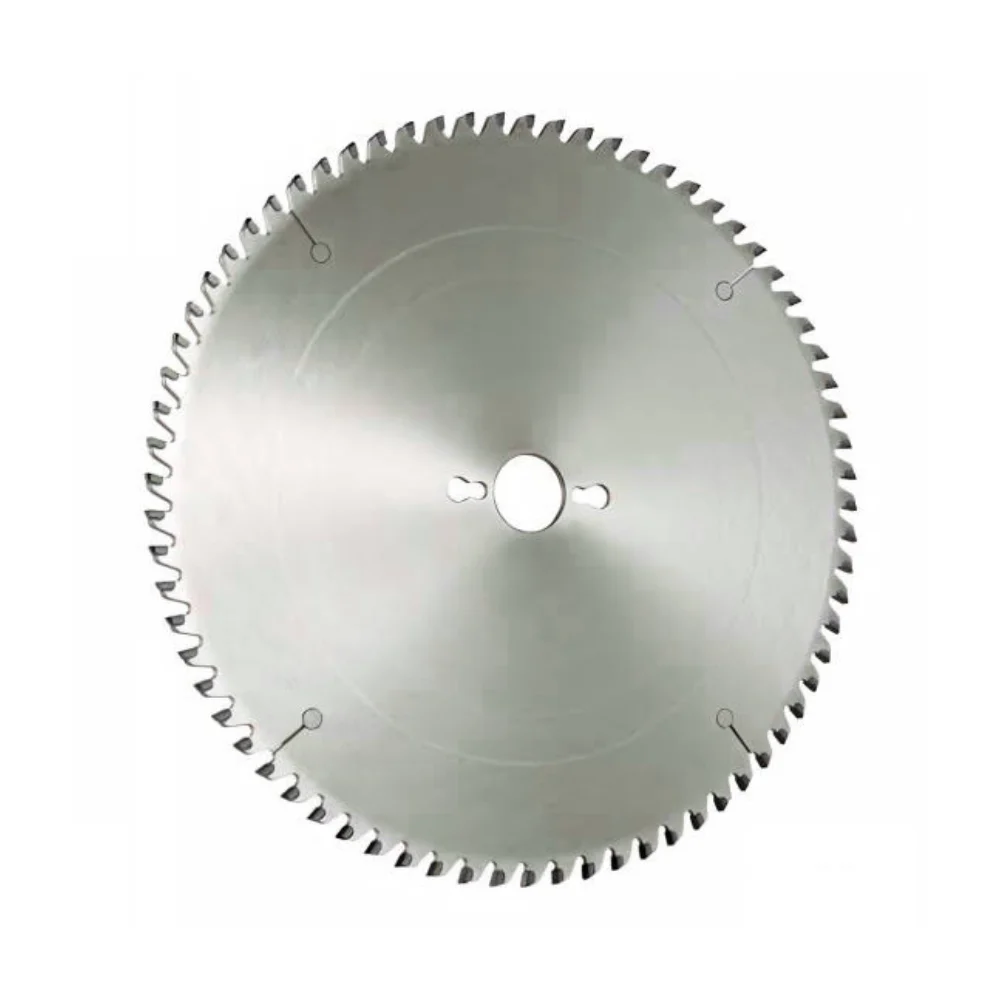
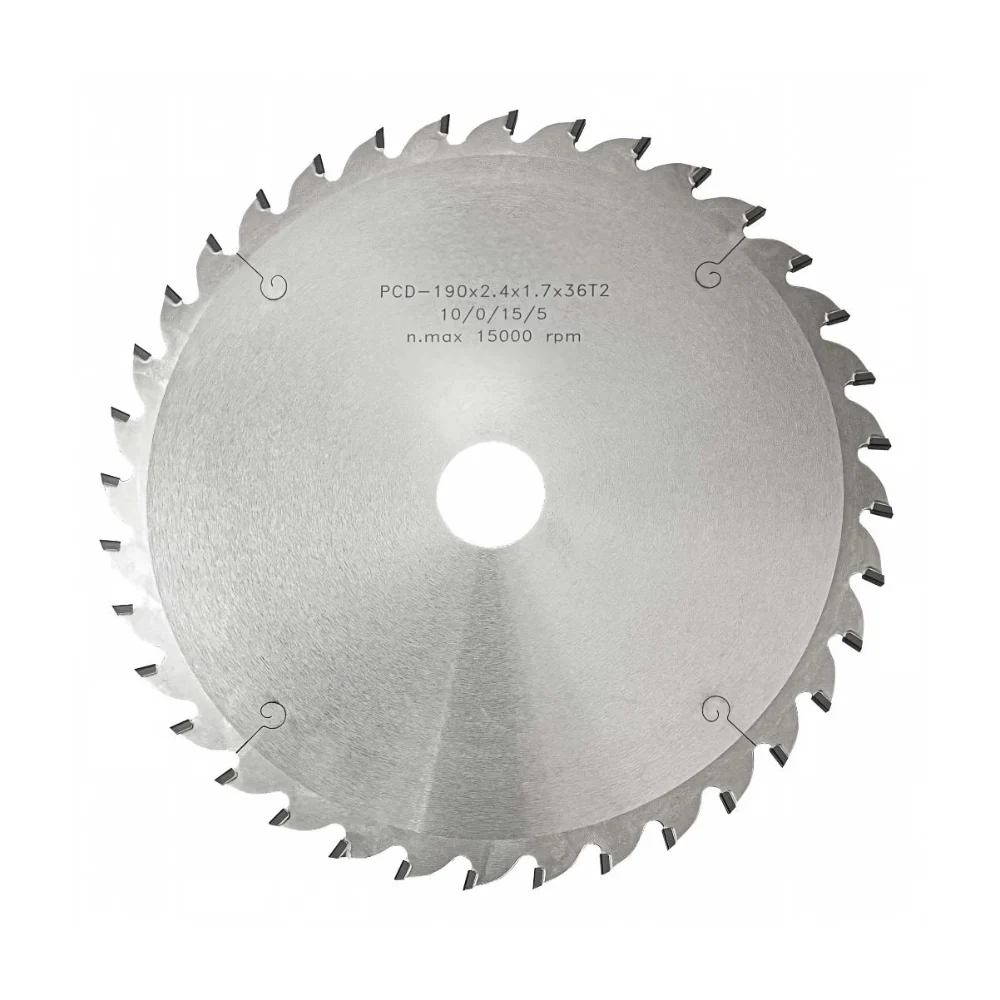
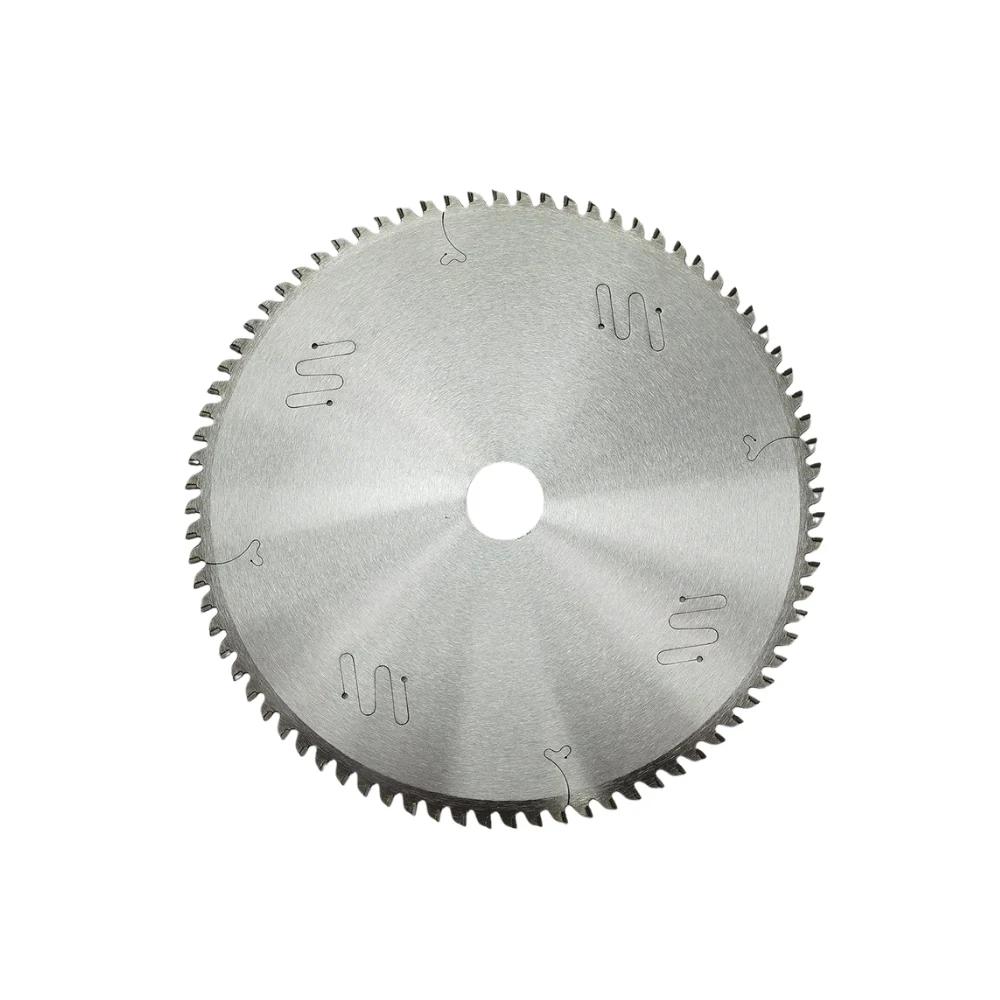
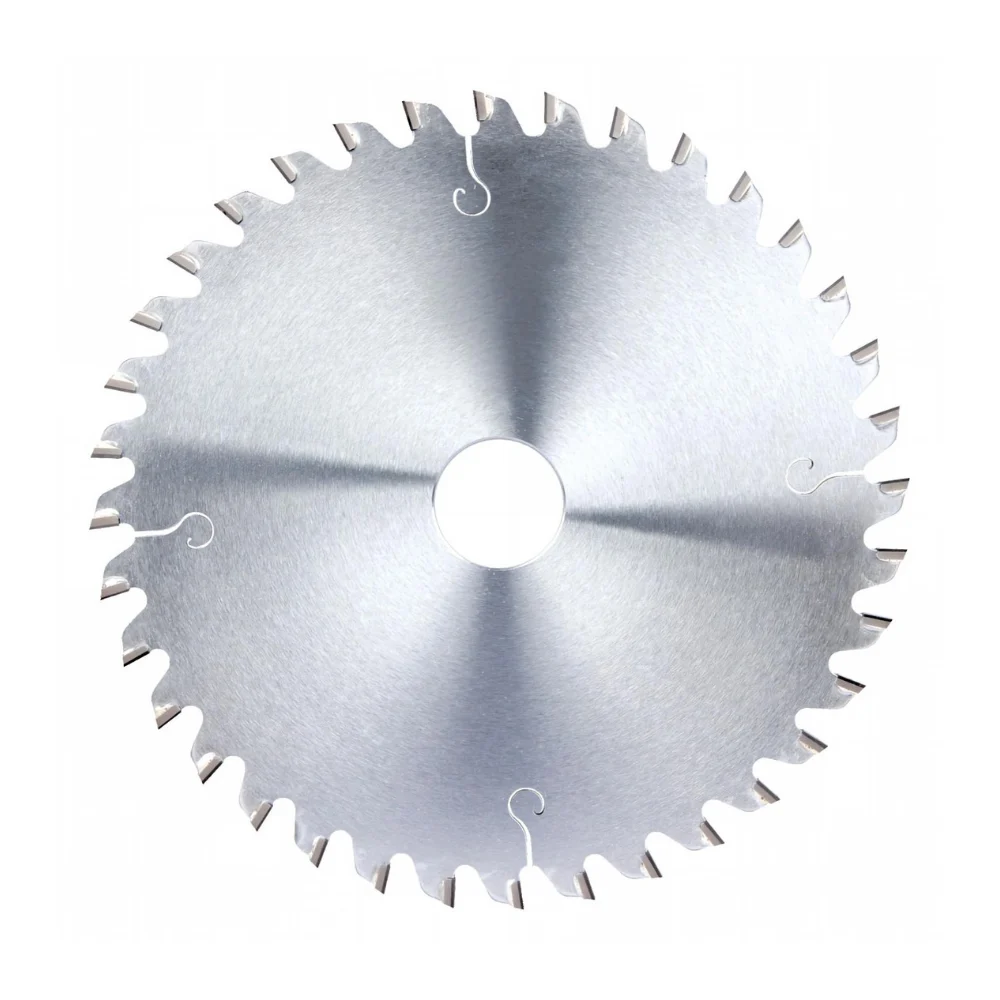
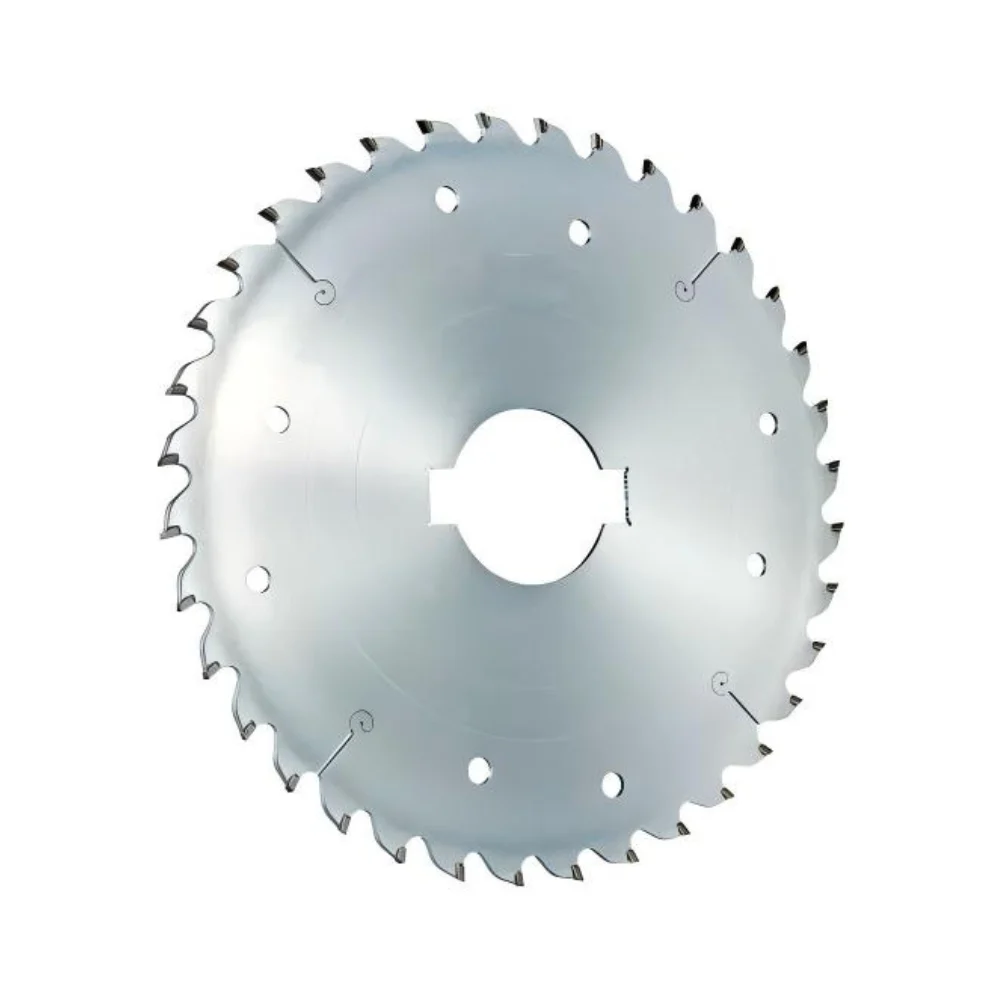
PCD Circular Saw Blades
High-precision PCD circular saw blades for cutting wood, engineered panels, aluminum, and other non-ferrous materials. Polycrystalline diamond cutting edges provide long tool life, stable cutting quality, and excellent wear resistance in clean, controlled production environments. Not suitable for ferrous metals.
PCD Circular Saw Blades for High-Performance Cutting
Persistools PCD circular saw blades are designed for high-efficiency cutting of wood-based panels, aluminum, and other non-ferrous materials where long tool life and consistent cutting quality are required.
The cutting teeth use polycrystalline diamond (PCD), a highly wear-resistant cutting material capable of maintaining its cutting geometry for significantly longer periods than conventional carbide in suitable applications.
PCD saw blades are commonly selected for automated production lines, high-value panel processing, and applications where frequent blade replacement would reduce productivity.
Typical advantages include:
- Long service life
- Stable cutting dimensions
- Consistent edge quality
- Reduced tool-change frequency
- High wear resistance
- Suitable for continuous production
- Good performance on abrasive non-ferrous materials
Suitable Materials
PCD circular saw blades are commonly used for:
- MDF
- Particleboard
- Laminated panels
- Melamine-faced boards
- Engineered wood
- Composite wood panels
- Aluminum profiles
- Aluminum plates
- Aluminum composite panels
- Other non-ferrous materials
They are particularly useful when cutting abrasive panels, coated materials, or high-volume production materials that cause rapid wear on conventional carbide saw blades.
Why Material Cleanliness Matters
PCD tools perform best when the workpiece material is stable and free from unexpected ferrous contamination.
Wood panels, recycled boards, and composite materials may occasionally contain:
- Nails
- Screws
- Metal fragments
- Steel staples
- Embedded contaminants
- Hard foreign particles
Direct contact with ferrous metal can severely damage a PCD cutting edge.
For this reason, PCD saw blades are better suited to controlled production environments where raw material quality and contamination are properly managed.
Not Suitable for Ferrous Metals
PCD should not be used for cutting steel, iron, or other ferrous materials.
Under cutting heat, diamond can react with iron-group elements, causing rapid degradation of the cutting edge.
For steel and other ferrous materials, carbide, CBN, or other suitable cutting materials should be selected instead.
Precision Manufacturing for Stable Cutting
Because PCD saw blades are commonly used at high rotational speeds and in automated equipment, manufacturing accuracy is especially important.
Important manufacturing factors include:
- Precision saw body machining
- PCD tooth positioning
- Brazing accuracy
- Tooth geometry
- Concentricity control
- Side runout control
- Tensioning
- Dynamic balance
- Precision grinding or laser finishing
These factors help maintain stable cutting, reduce vibration, and provide consistent edge quality during long production cycles.
Custom Designs
PCD circular saw blades can be manufactured according to:
- Blade diameter
- Bore size
- Kerf width
- Tooth count
- Tooth geometry
- Cutting material
- Machine type
- Spindle speed
- Feed conditions
- Required edge quality
- Customer drawing or existing sample
Different designs can be optimized for woodworking, panel processing, aluminum cutting, and other non-ferrous applications.
| Blade Diameter | Bore Size | Kerf Width | Tooth Count | Cutting Material | Typical Application |
|---|---|---|---|---|---|
| Ø160 mm | Custom | 2.2–3.2 mm | Custom | PCD | Furniture panels |
| Ø180 mm | Custom | 2.5–3.5 mm | Custom | PCD | MDF / Laminated boards |
| Ø200 mm | Custom | 2.8–3.8 mm | Custom | PCD | General panel cutting |
| Ø250 mm | Custom | 3.0–4.2 mm | Custom | PCD | Engineered wood |
| Ø300 mm | Custom | 3.2–4.5 mm | Custom | PCD | High-production panel cutting |
| Ø350 mm | Custom | 3.5–5.0 mm | Custom | PCD | Aluminum / Composite panels |
| Ø400 mm | Custom | 4.0–5.5 mm | Custom | PCD | Large-format cutting |
| Custom | Custom | Custom | Custom | PCD | Special applications |
Tool Type: PCD Circular Saw Blade
Cutting Material: Polycrystalline Diamond (PCD)
Application: Wood / Engineered Panels / Aluminum / Non-Ferrous Materials
Tooth Geometry: Custom According to Material and Cutting Requirement
Blade Diameter: Standard and Custom
Bore Size: Custom According to Machine
Kerf Width: Custom
Tooth Count: Custom
Balancing: According to Blade Diameter and Operating Speed
Important: Not suitable for steel, iron, or other ferrous materials
Customization: Diameter, bore, tooth count, kerf, PCD geometry, and machine interface available on request.
What materials can PCD circular saw blades cut?
Why do PCD saw blades last longer than carbide blades?
Can PCD circular saw blades cut steel?
Why is material cleanliness important when using PCD saw blades?
If the above questions do not solve your doubts, please contact us through email or phone as well!
Persistools is fully committed to pursuing maximum efficiency in customer service and delivering premium customer experience. Whether you have pre-sales questions or encounter after-sales issues, you will receive our swift reply at all times. Our team always stays positive and dedicated to solving problems effectively.
