
Industrial Razor Slitting Blades
Ultra-thin industrial razor slitting blades for continuous cutting of plastic film, packaging film, foil, paper, tape, and other thin web materials. Available in three-hole, kidney-hole, and custom mounting designs, with stainless steel, tungsten carbide, and ceramic material options for clean, low-resistance slitting.
Industrial Razor Slitting Blades
Persistools industrial razor slitting blades are ultra-thin fixed cutting blades used for continuous slitting of film, foil, paper, tape, nonwoven materials, and other thin web products.
Unlike rotary slitting knives, razor blades are normally mounted in a fixed holder while the material moves continuously across the cutting edge.
The moving web passes against the sharp blade and is separated directly, allowing efficient slitting without requiring a powered rotating knife shaft.
This simple cutting principle makes razor slitting widely used in converting, packaging, film production, and other continuous web-processing applications.
Thin and Sharp Cutting Edge
Razor slitting blades are designed with a very thin body and precision-ground cutting edge.
The combination of low blade thickness and sharp edge helps reduce cutting resistance and provides clean separation of thin materials.
A properly prepared cutting edge helps reduce:
- Burrs
- Tearing
- Frayed edges
- Material dragging
- Uneven slit lines
- Incomplete separation
This is particularly important for thin films where excessive cutting force can deform or stretch the material.
Multiple Mounting Designs
Different machines and blade holders use different mounting-hole configurations.
Common blade designs include:
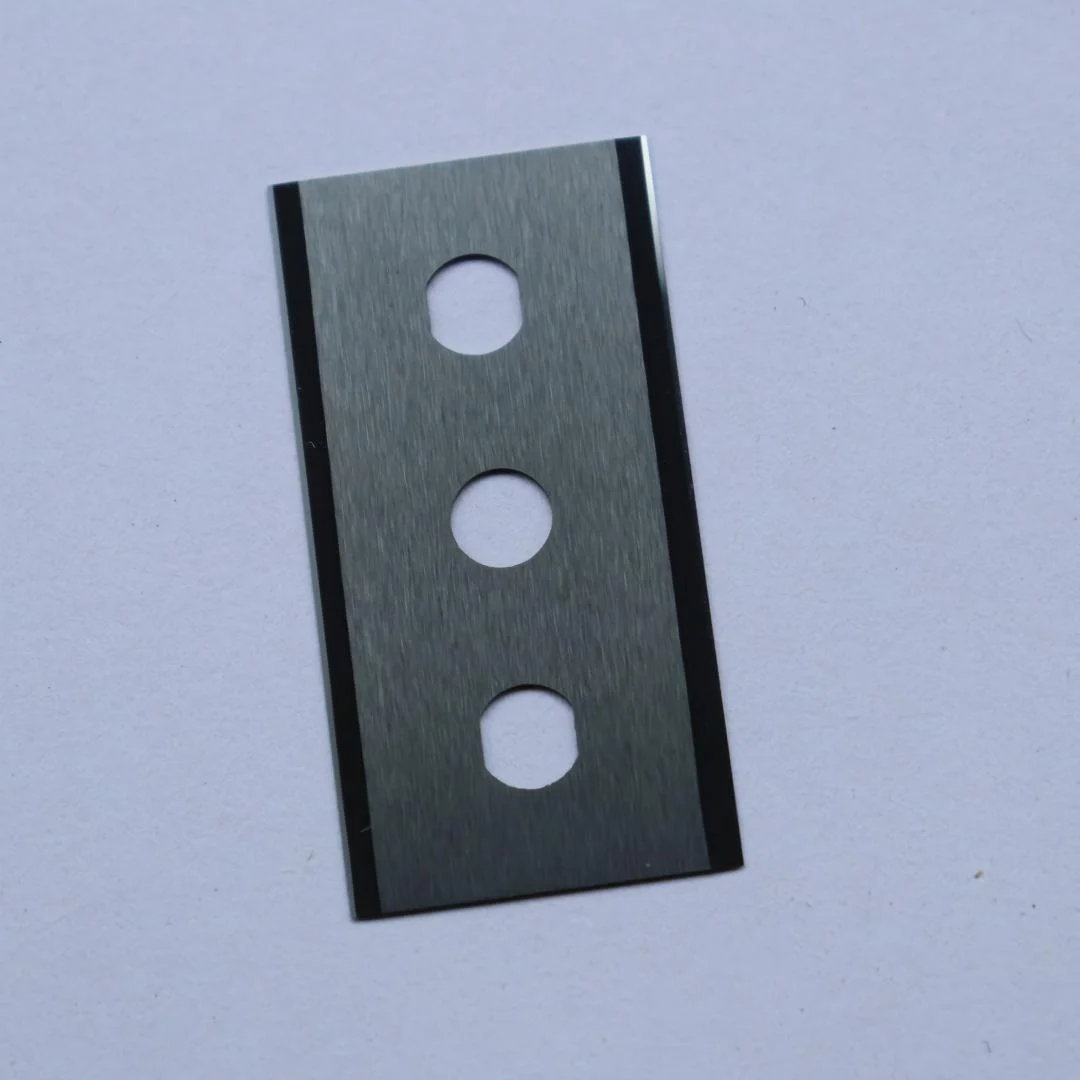
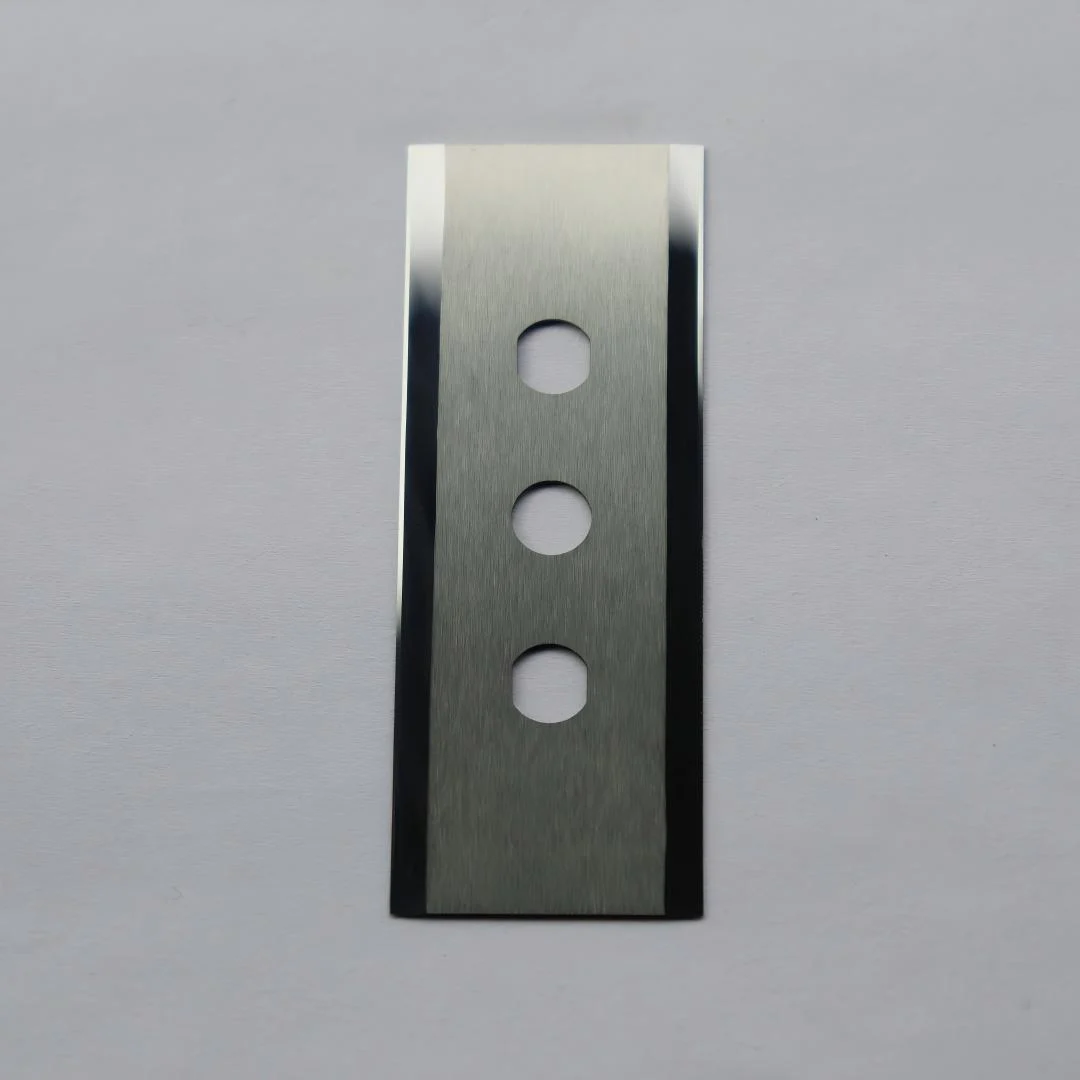
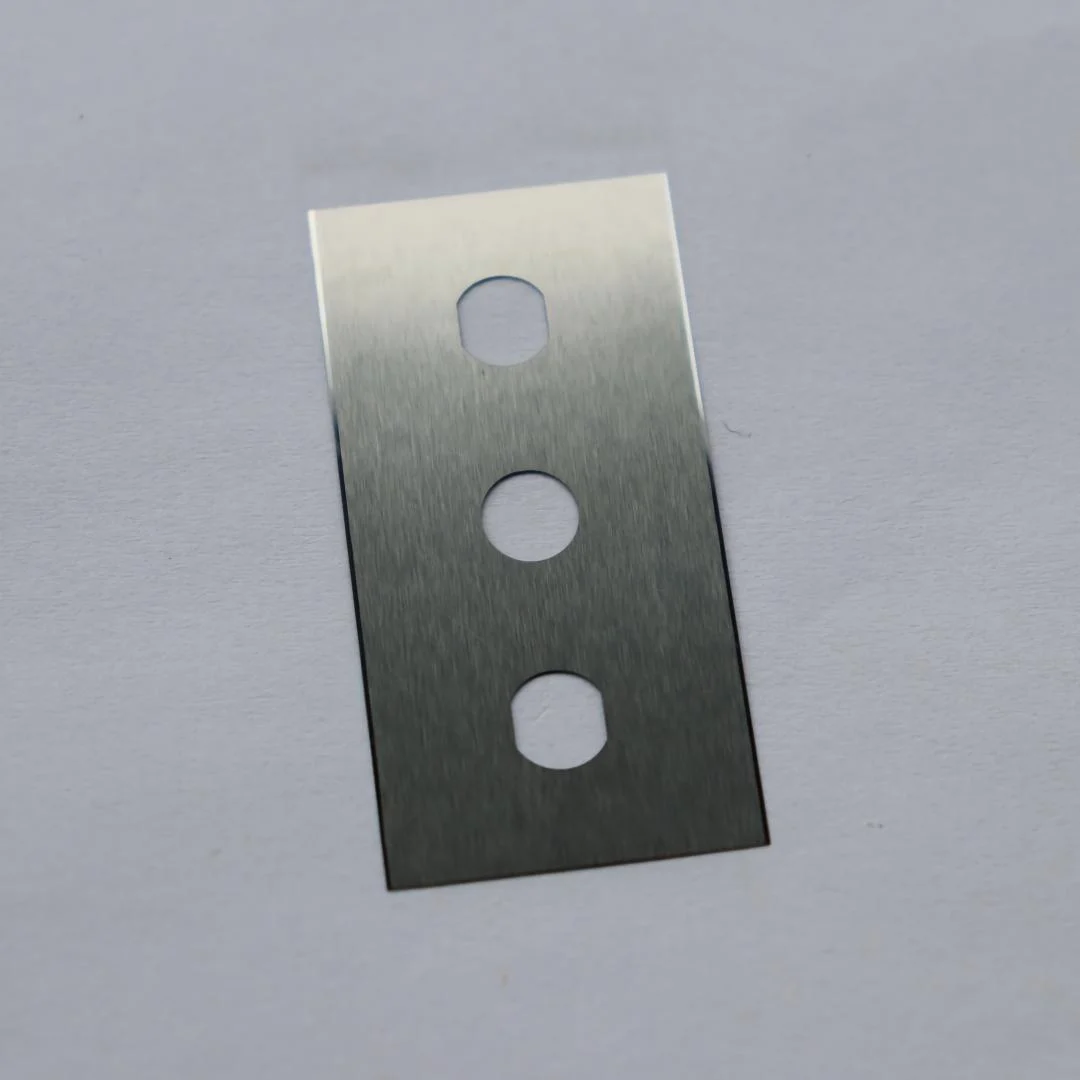
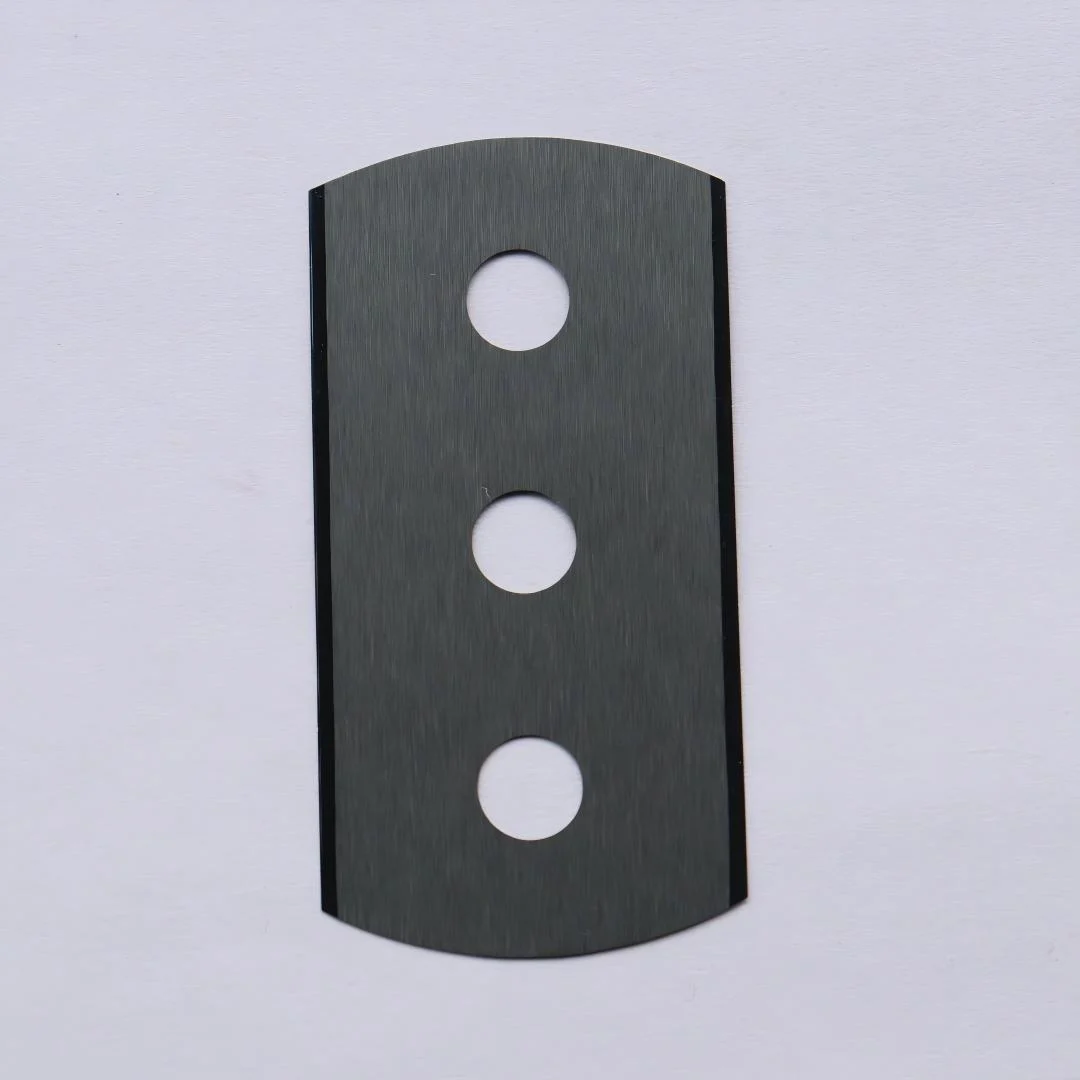
- Three-hole blades
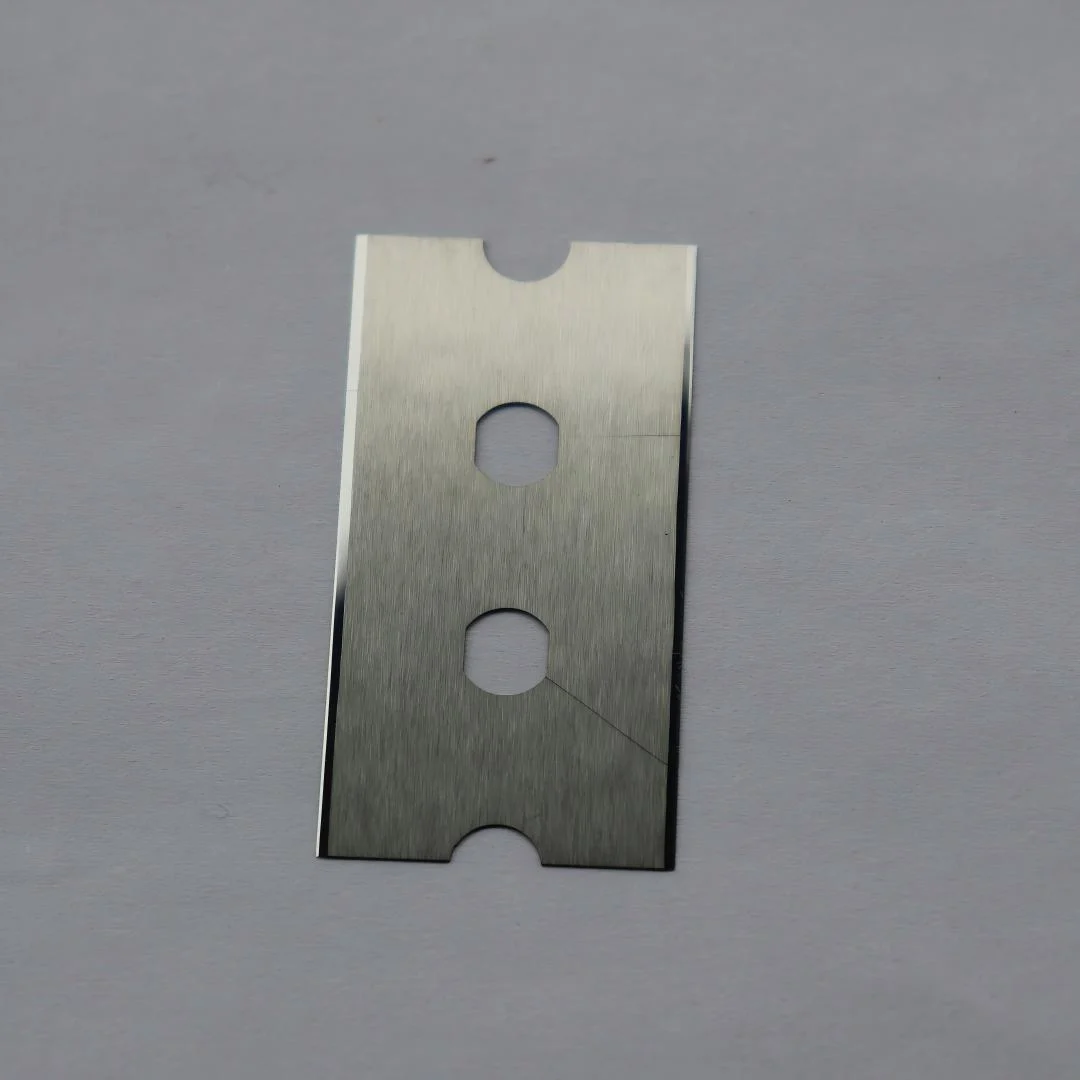
- Kidney-hole blades
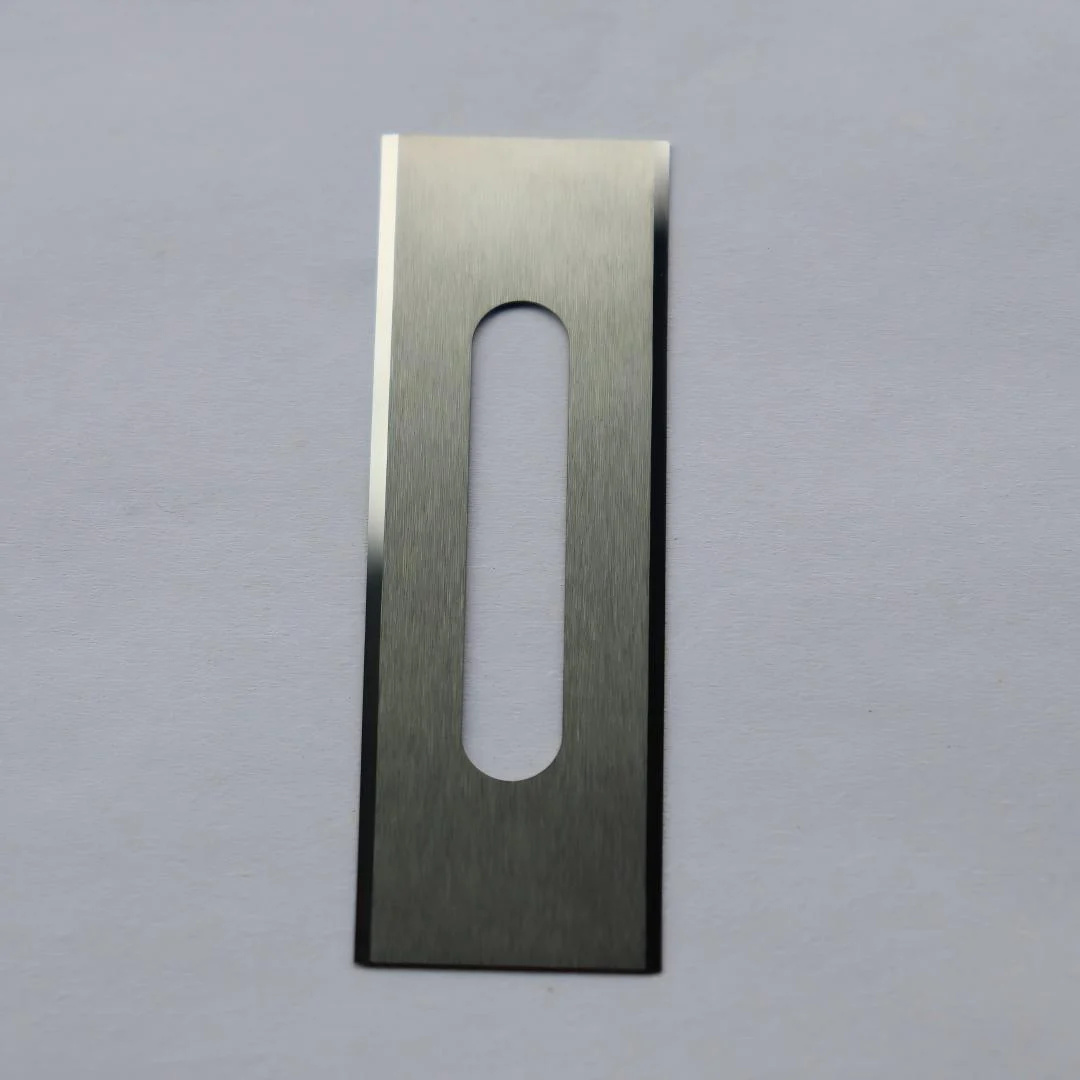
- Slot-hole blades
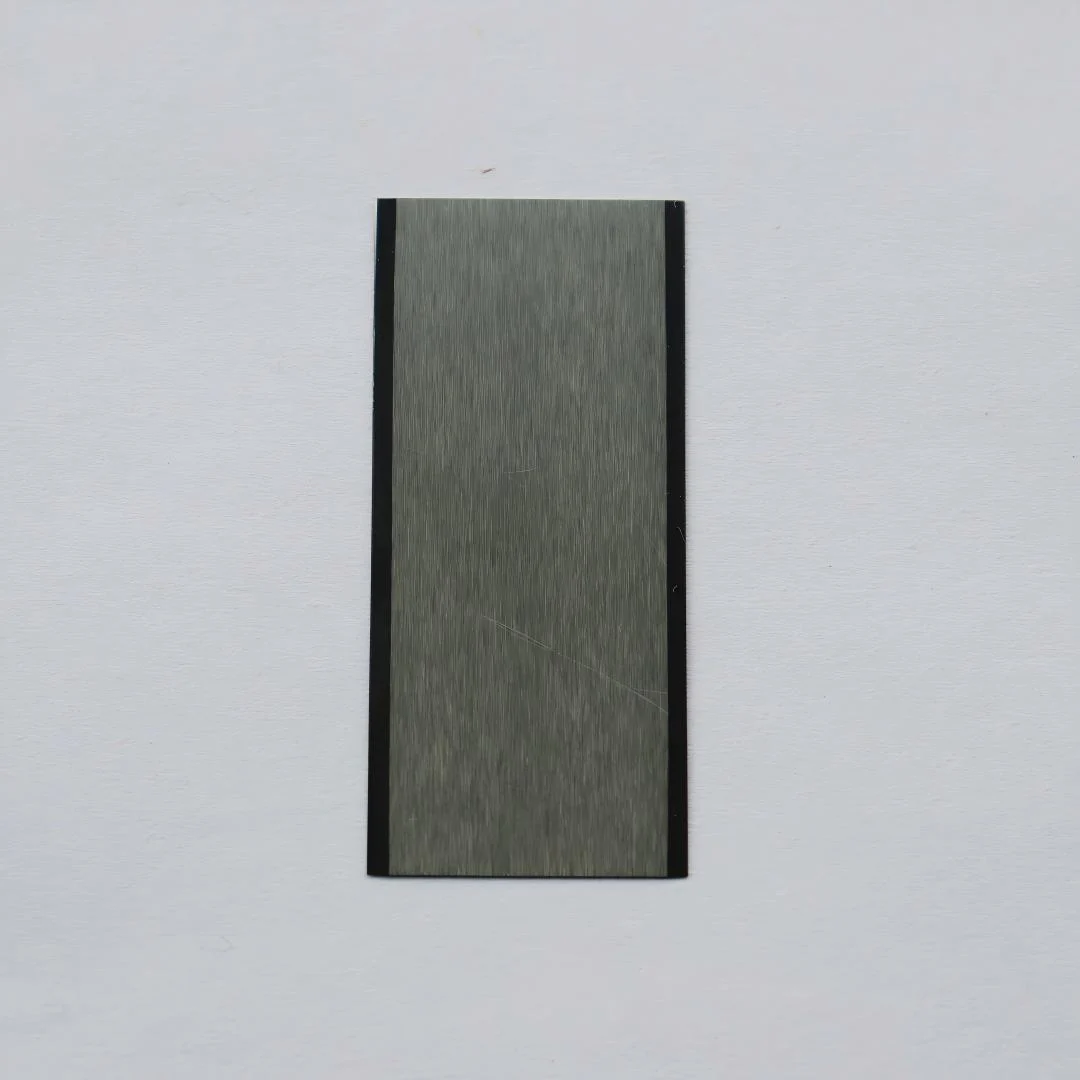
- Standard rectangular razor blades
- Custom mounting patterns
The classic three-hole blade is commonly produced in dimensions around 43 × 22 mm, with different thicknesses available according to cutting conditions.
Custom blade dimensions and hole configurations can also be manufactured according to existing holders, drawings, or samples.
Different Blade Materials
Different blade materials can be selected according to required sharpness, wear resistance, corrosion resistance, and production volume.
Stainless Steel
Stainless steel blades provide a practical balance of sharpness, toughness, corrosion resistance, and cost.
They are widely used for general-purpose film, paper, tape, and packaging-material slitting.
Tungsten Carbide
Tungsten carbide razor blades provide significantly higher wear resistance and maintain the cutting edge for longer production runs.
They are suitable for high-volume slitting or abrasive materials where frequent blade replacement is undesirable.
Ceramic
Ceramic razor blades provide high wear resistance, corrosion resistance, and a non-metallic cutting edge.
They can be used in selected specialty applications where conventional metal blades are less suitable.
Typical Applications
Industrial razor slitting blades are commonly used for:
- PE film
- PP film
- BOPP film
- PET film
- Packaging film
- Plastic sheet
- Adhesive tape
- Paper
- Aluminum foil
- Nonwoven materials
- Thin composite webs
- Other continuous roll materials
The final blade material, thickness, edge geometry, and mounting configuration should be selected according to the material thickness, web speed, abrasiveness, and required slit quality.
| Blade Size (mm) | Thickness (mm) | Hole Type | Material | Edge Type | Typical Application |
|---|---|---|---|---|---|
| 43 × 22 | 0.10 | Three-Hole | Stainless Steel | Single / Double Bevel | Thin Plastic Film |
| 43 × 22 | 0.20 | Three-Hole | Stainless Steel | Single / Double Bevel | Packaging Film |
| 43 × 22 | 0.30 | Three-Hole | Stainless Steel | Single / Double Bevel | Film / Tape |
| 43 × 22 | 0.40 | Three-Hole | Stainless Steel | Single / Double Bevel | Thicker Web Materials |
| 43 × 22 | 0.20–0.40 | Kidney-Hole | Stainless Steel | Custom | Film Converting |
| 43 × 22 | 0.20–0.40 | Three-Hole / Custom | Tungsten Carbide | Precision Ground | High-Volume Slitting |
| Custom | Custom | Custom | Ceramic | Precision Ground | Specialty Applications |
| Custom | Custom | Custom | Stainless Steel / Carbide / Ceramic | Custom | Special Machine Holders |
Product Type: Industrial Razor Slitting Blade
Typical Size: 43 × 22 mm
Thickness Range: Approx. 0.10–0.40 mm
Hole Options: Three-Hole / Kidney-Hole / Slot / Custom
Materials: Stainless Steel / Tungsten Carbide / Ceramic
Edge Geometry: Single Bevel / Double Bevel / Custom
Application: Film / Foil / Paper / Tape / Nonwoven / Thin Web Materials
Cutting Method: Fixed Razor Slitting
Customization: Size, thickness, mounting holes, blade material, and edge geometry available on request.
What are industrial razor slitting blades used for?
What is the difference between razor slitting and rotary slitting?
What blade materials are available?
Can you produce blades for existing slitter holders?
If the above questions do not solve your doubts, please contact us through email or phone as well!
Persistools is fully committed to pursuing maximum efficiency in customer service and delivering premium customer experience. Whether you have pre-sales questions or encounter after-sales issues, you will receive our swift reply at all times. Our team always stays positive and dedicated to solving problems effectively.
