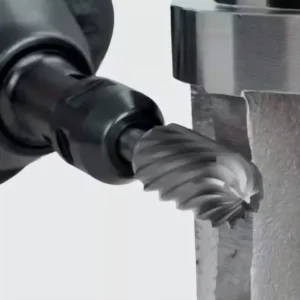
Tungsten carbide rotary burrs are essential consumables for metal grinding, deburring and mold finishing. Tooth chipping, edge breakage and abnormal wear are top cost concerns for machining businesses. Many operators attribute these failures purely to product quality, but in fact, over 70% of abnormal tool damage stems from mismatched selection and improper operating practices.
From an industrial practical perspective, this article breaks down the root causes of burr tooth failure, and shares standardized methods covering tool selection, clamping, grinding operation and daily maintenance to help extend tool life and reduce consumable costs.
What Causes Tooth Chipping and Breakage in Rotary Burrs?
Abnormal tooth damage falls into two main categories: selection defects and improper operation, with the latter being the leading cause.
- Selection-related causes Mismatch between tool material and workpiece hardness, poor head-to-shank welding quality, incompatible shank diameter with equipment power, and incorrect tooth geometry all lead to overloaded cutting teeth, resulting in chipping, tooth loss or even complete head detachment.
- Operation-related causes Poor clamping concentricity, speeds far exceeding the safe range, impact from excessive feed force, forced grinding with clogged flutes, and physical drops subject teeth to impact and shear forces beyond their design limits, eventually causing edge chipping, tooth breakage or shank fracture.
How to Reduce Chipping Risk Through Proper Tool Selection
Preventing abnormal tool wear starts with correct specification matching to eliminate overloading at the source.
1. Match Tool Grade to Workpiece Hardness
Rotary burrs of different materials balance hardness and toughness differently; mismatched grades greatly increase chipping risk.
- For high-hardness materials (hardened steel, die steel, cast steel): Choose cobalt-enriched carbide or YG6X grade burrs, which deliver high hardness and wear resistance for hard metal cutting.
- For copper, aluminum, cast iron and general steel: Choose YG8 grade burrs, which offer better toughness and impact resistance, and are less prone to chipping from chip adhesion or impact.
- Never use low-hardness high-speed steel burrs on hard metals, or use highly brittle carbide burrs on highly gummy, chip-prone materials.
2. Prefer Vacuum-Brazed Burrs for Higher Weld Strength
The weld strength between the cutting head and shank directly determines the risk of tooth loss or head detachment.
- Vacuum-brazed rotary burrs feature uniform, full weld seams with high bonding strength. They resist de-bonding even under continuous high-temperature operation and offer better concentricity, ideal for long-duration industrial grinding.
- Conventional copper-brazed or high-frequency welded products have lower weld strength that softens under heat, leading to loose or detached heads under high-speed heavy loads. They are only suitable for light household use.
3. Match Shank Diameter to Equipment Power to Avoid Torque Overload
- For heavy-duty industrial pneumatic/electric grinders (≥500W): Use 6mm standard shank burrs, which have higher shank strength to withstand high-torque operation.
- For small handheld electric grinders and mini tools: Use 3mm shank burrs matched to low-power equipment.
- Forcing small-shank burrs into high-power equipment causes torque overload, leading to shank breakage, tooth chipping and safety hazards.
Standardized Grinding Techniques to Eliminate Abnormal Chipping
Incorrect operating technique is the top cause of premature chipping in new burrs. Following the standard procedures below can reduce over 80% of abnormal tool damage.
1. Proper Clamping: Ensure Concentricity and Even Load Distribution
Poor clamping is a hidden cause of localized tooth fracture. Follow two key rules:
- Sufficient clamping length: The collet must grip at least 15mm of the shank. Never operate with only 3–5mm clamped. Insufficient grip causes excessive runout at high speed, leading to cyclic uneven loading that quickly causes chipping or shank fracture.
- Verify runout after clamping: Run the tool at low speed after setup to check radial runout of the head. If concentricity deviation is excessive, re-clamp or replace a worn collet. Burrs with poor concentricity carry high chipping risk and produce chatter marks and scratches on workpieces.
2. Speed Control: Match to Material, Never Exceed Safe Speed
Carbide rotary burrs have a defined safe speed range. Excessive speed causes centrifugal overload, leading to chipping or fragmentation; too low a speed increases cutting resistance and also accelerates wear.
Recommended speeds by application:
- Soft metals (copper, aluminum): 15,000–25,000 rpm for 6mm shank; 20,000–30,000 rpm for 3mm shank
- Steel and cast iron: Reduce speed by 20%–30%
- Hardened steel and high-hardness alloys: Reduce by an additional ~15%
Note: Never exceed the maximum safe speed marked on the product. Chipping and fragmentation at overspeed pose serious safety risks.
3. Feed Operation: Steady and Smooth, Avoid Impact
- Steady lateral feed: Keep the burr in stable contact with the workpiece and move uniformly along the grinding path. Do not apply heavy pressure on a single spot or dwell in one place for long, which causes localized overload on cutting teeth.
- Smooth engagement and retraction: Ease the burr into the workpiece gradually; do not plunge forcefully. Retract smoothly when finishing. Never strike sharp edges or steps at full speed, as right-angle impact almost always fractures cutting teeth.
- No excessive lateral force: Rotary burrs cut primarily via radial forces. Heavy lateral bending loads subject teeth to extra shear stress, greatly increasing the risk of tooth fracture and head detachment.
4. Timely Chip Removal: Avoid Overload from Clogged Flutes
Packed chips in flutes drastically increase cutting resistance and impose extra load on teeth, causing workpiece blackening and accelerating tooth fracture and wear.
- Stop every 10–15 minutes during grinding to clean chip buildup from flutes with a wire brush, maintaining sharp cutting edges.
- When grinding soft, gummy metals, increase cleaning frequency. Never continue grinding forcefully with clogged flutes.
Daily Maintenance & Storage to Extend Tool Life
Neglected maintenance also leads to abnormal wear of rotary burrs:
- Store separately when not in use: Keep unused burrs in a dedicated tool case or on a foam pad to prevent the cutting head from knocking against other hardware or hard objects. Small nicks on tooth edges will propagate rapidly at high speed, leading to large-scale chipping.
- Avoid sudden cooling after high temperature: Do not immerse a hot burr in cold water immediately after prolonged grinding. Thermal shock causes carbide embrittlement and internal cracks, which lead to easy chipping in subsequent use.
- Inspect collets regularly: Replace worn or deformed collets promptly to avoid abnormal tool damage caused by slippage or poor concentricity.
Frequently Asked Questions
Q: A new burr chips on first use – does that always mean poor product quality?
A: Not necessarily. Most chipping in new burrs is operation-related: poor clamping concentricity, impact on workpiece at startup, overspeed, or aggressive feed are common triggers. We recommend checking operating practices first, then verifying that the tool grade matches the workpiece hardness.
Q: Can a burr with minor chipping still be used?
A: If only 1–2 edge teeth have slight chipping and overall cutting performance is unaffected, it can still be used for roughing or non-precision operations. However, if chipping is extensive or runout is noticeable, replace the burr promptly. Continued use will worsen damage and cause scratches or chatter marks on the workpiece.
Q: Can used rotary burrs be resharpened for reuse?
A: Carbide rotary burr teeth can be resharpened on dedicated grinding machines, but this requires professional equipment and expertise, and cutting performance will decrease slightly. For standard-size, low-cost burrs, resharpening often costs more than a new unit and is not cost-effective. Large or custom burrs can be resharpened as needed.
Conclusion
Tooth chipping and breakage in carbide rotary burrs are largely preventable through three key steps: proper selection matching, standardized operation, and regular maintenance. Standardizing details from clamping concentricity and grinding speed to feed technique will not only extend tool life and reduce consumable costs, but also improve grinding quality and operational safety.